
Key Takeaways
- Renovation typically refreshes or restores an existing space without changing its function, while remodeling transforms the structure, layout, or purpose of a room
- Budget expectations differ sharply between the two approaches, with structural changes often costing two to three times more than cosmetic updates
- Permits, timelines, and contractor requirements vary significantly depending on whether you are altering load-bearing elements or simply updating finishes
- Return on investment tends to favor targeted cosmetic updates in kitchens and bathrooms over large-scale structural reconfigurations
- The decision often hinges on the age of your home, your long-term plans for the property, and whether the current layout actually meets your lifestyle needs
- Clear communication with your contractor about scope prevents the most common cost overruns, which usually stem from midway changes between the two approaches
- Understanding resale implications before breaking ground helps you avoid overbuilding for your neighborhood
What Most Homeowners Get Wrong From Day One
Walk into any hardware store on a Saturday morning and you will overhear at least three couples debating what to do with their kitchen. One wants new cabinets and countertops. The other wants to knock down a wall and start fresh. They use the words renovation and remodel like they mean the same thing. They do not.
This confusion is not harmless. It leads to mismatched expectations with contractors, budgets that balloon halfway through a project, and timelines that stretch from weeks into months. When you cannot clearly name what you want to do to your house, you cannot clearly plan for it either.
The good news is that once you understand how these two approaches actually differ, almost every other decision gets easier. Costs become predictable. Contractor conversations get sharper. You stop second-guessing yourself at every showroom visit. Let us break it all down so you can walk into your next project knowing exactly which path you are on.
How the Industry Actually Defines These Two Terms
In the construction world, renovation means restoring or refreshing something that already exists. You are keeping the bones of the space intact. New paint, new flooring, new fixtures, maybe updated cabinets in the same footprint. The kitchen is still a kitchen. The bedroom is still a bedroom. Nothing fundamental about the space changes.
Remodeling, on the other hand, means changing the structure or purpose of a space. You might combine two small bedrooms into a primary suite. You might tear out a wall between the kitchen and living room to create an open floor plan. You might convert a basement into a rental unit. The function, the layout, or both get fundamentally altered.
The difference between remodeling and renovation really comes down to one question: are you changing what the space is, or just how it looks? That single distinction drives every other decision that follows, from budget to permits to how long you will be living in a construction zone.
Why the Cost Gap Is Bigger Than People Expect

Money is where the two paths really separate. A renovation typically stays within a predictable range because you are working with the existing structure, plumbing, and electrical. You know what is behind the walls because you are leaving the walls alone. Surprises are minimal.
Remodeling introduces variables that cosmetic work never touches. Moving plumbing lines. Rerouting electrical. Installing a structural beam where a load-bearing wall used to be. Each of these adds engineering costs, permit fees, and specialized labor that cosmetic projects simply do not require. According to Fixr, about 48% of homeowners plan renovations in 2025 with median household spending expected to hit $15,000, which tracks well for refresh-style work but barely scratches the surface for a full structural overhaul.
Here is a rough breakdown of where costs typically land:
- Cosmetic renovation of a mid-sized kitchen: $12,000 to $25,000
- Full kitchen remodel with layout changes: $40,000 to $90,000
- Bathroom refresh with new tile and fixtures: $8,000 to $18,000
- Bathroom remodel with relocated plumbing: $25,000 to $55,000
- Whole-house cosmetic updates: $30,000 to $60,000
- Whole-house remodel involving walls or additions: $150,000 and up
The industry itself has grown to meet this demand. According to the National Association of Home Builders, the number of remodeling firms climbed to 128,000 at the start of 2025, roughly double what it was in 2000. More options can mean better pricing, but it also means more variability in quality and scope interpretation.
Permits, Inspections, and the Paperwork Nobody Warns You About
One of the quieter differences between the two approaches is how much the local building department gets involved. A renovation often requires minimal permitting. Swapping a vanity, retiling a floor, painting cabinets, replacing a faucet. In most jurisdictions, none of this needs a permit at all.
Remodeling is a different story. The moment you touch structural elements, change the footprint, or alter major systems, permits become mandatory. Skipping them creates serious problems when you try to sell the house later, because unpermitted work shows up in inspections and can kill deals or force expensive retroactive compliance.
When a Permit Becomes Non-Negotiable
Any time a project involves moving or adding plumbing, upgrading electrical panels, altering load-bearing walls, changing the roofline, or adding square footage, you need a permit. Window replacements that change the opening size count too. So does converting a garage into living space. Inspectors will visit multiple times during the project, and each phase must pass before the next can begin. This adds time, but it also protects you from shoddy work and from liability down the road.
Timeline Realities That Catch People Off Guard
The amount of time a project takes is directly tied to how deep you are going. A kitchen refresh with new paint, hardware, and countertops can wrap up in two to three weeks. A full kitchen remodel with relocated appliances and new cabinetry layout can easily stretch past three or four months once you factor in permits, demolition, inspections, and finishing work.
Weather plays a role too. Exterior work during rainy or freezing seasons often adds weeks. So does supply chain unpredictability, which has been an ongoing issue for specialty items like custom cabinetry and imported tile. When you are planning, always add a cushion of at least 20 percent to whatever your contractor quotes.
How to Build a Realistic Schedule
Start by mapping out the critical path. Which decisions have to happen first? Flooring material has to be chosen before baseboards get ordered. Cabinet style affects countertop measurements. Appliance dimensions dictate cabinet openings. Build a decision calendar that puts every choice ahead of the moment the contractor needs it. The homeowners who finish on time are not luckier than everyone else. They just made their decisions earlier.
Which Approach Actually Adds More Value to Your Home
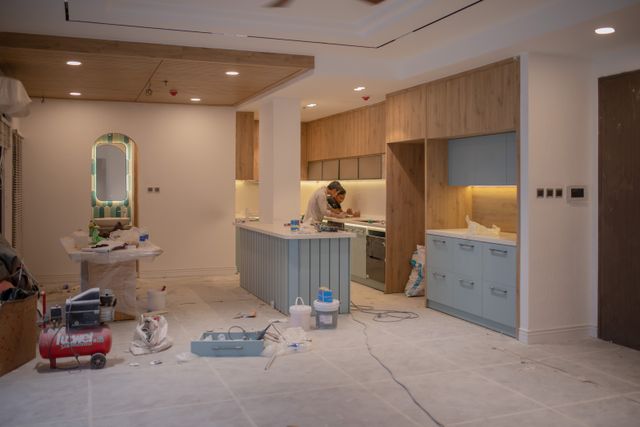
This is where things get interesting and where most people guess wrong. The assumption is that bigger projects add more value. They often do not. Resale data consistently shows that modest renovations in kitchens and bathrooms return a higher percentage of their cost than large-scale remodels.
A fresh kitchen with new cabinet fronts, updated countertops, and modern lighting might recoup 70 to 80 percent of its cost at resale. A full gut remodel with a new layout and premium finishes might recoup only 55 to 65 percent, even though it cost three times more. Buyers pay for presentation. They rarely pay a full premium for structural changes that reflect your personal taste.
That said, remodeling pays off in two specific scenarios. First, when the existing layout is genuinely dysfunctional and limiting the home’s market appeal. Second, when you plan to stay in the house long enough to enjoy the changes yourself. If your five-year plan does not include selling, lifestyle value matters more than resale math.
Consider these value-driven priorities before deciding:
- Address any deferred maintenance before cosmetic upgrades
- Prioritize kitchens and primary bathrooms for the strongest return
- Avoid overbuilding compared to neighborhood comparables
- Keep finishes neutral enough to appeal to future buyers
- Factor in energy efficiency upgrades that reduce operating costs
Before planning any project, it is worth running through a whole home maintenance checklist to catch underlying issues that would otherwise undermine your shiny new finishes.
Comparing the Two Paths Side by Side
Sometimes the clearest way to see the contrast between renovating and remodeling is to line them up directly. Each approach has its own rhythm, its own risks, and its own rewards. Neither is universally better. They answer different questions about what you want your home to become.
Renovation suits homeowners whose space works but feels tired. The layout functions. The flow makes sense. The home just needs a visual and functional refresh to feel current again. Think of it as updating the operating system without replacing the hardware.
Remodeling suits homeowners whose space actively fights against how they live. The kitchen is closed off from everyone during gatherings. The primary bedroom has no proper closet. The upstairs has three bedrooms when the family needs two plus an office. In these cases, cosmetic work will never solve the real problem.
Here is a quick side-by-side of what each approach delivers:
- Renovation preserves structure; remodeling changes it
- Renovation needs few permits; remodeling usually requires several
- Renovation finishes in weeks; remodeling takes months
- Renovation costs less per square foot; remodeling costs significantly more
- Renovation has predictable budgets; remodeling has higher surprise risk
- Renovation returns a higher percentage at resale on average
Choosing the Right Team for the Job You Are Actually Doing
The contractoryou hire matters more than almost any other decision in the entire process. A general handyman can handle most renovations without issue. New flooring, cabinet painting, light fixture swaps, backsplash tile. These are well within the skill set of a competent one-person operation or a small crew.
Remodeling is a different hiring conversation entirely. You need a licensed general contractor who can coordinate subtrades, pull permits, read structural plans, and manage inspections. If the project touches load-bearing elements, an engineer gets added to the team. If plumbing or electrical gets rerouted, licensed specialists must sign off on their portions. The complexity multiplies quickly.
Before any shovels hit the ground, take time to identify the contractors to hire before remodeling so you are not scrambling to find a plumber or electrician the week demolition starts. Pre-booking specialists keeps your schedule intact and gives you leverage when quotes come in.
Questions That Reveal Whether a Contractor Fits Your Project
Ask every candidate the same set of questions and compare their answers side by side. How many projects of this exact type have they completed in the last two years? Can they walk you through a similar job from start to finish? Who pulls the permits, and whose name goes on them? How do they handle change orders, and what is their average overage percentage? What happens if an inspection fails? The contractors who answer these cleanly and specifically are the ones worth shortlisting. Vague answers or dismissive body language tell you everything you need to know.
How to Decide Which Path Your Home Actually Needs
Standing in your living room with a notepad is a better starting point than scrolling through design inspiration. Before you look at a single countertop sample, you need to be honest about what is not working. Is the problem visual, or is it functional? If the space looks dated but flows well, you are almost certainly in renovation territory. If the space looks fine but you avoid using half of it, remodeling is probably on the table.
Walk through your home during the times you use it most. Weekday mornings. Weekend dinners. Holiday gatherings. Pay attention to where you feel cramped, where traffic jams up, where natural light disappears, where storage falls short. These friction points are the real brief for your project. Finishes do not fix friction. Layout changes do.
Budget constraints also force clarity. If your available funds cover a cosmetic update but not a structural change, a well-executed renovation will always beat a half-finished remodel. Scope creep is the single biggest reason home remodeling projects blow past their budgets, and it usually starts when someone decides mid-project to add just one more structural change to what began as a cosmetic refresh.
A Simple Framework for Making the Call
- If the layout works and only finishes feel dated, renovate
- If the layout actively frustrates daily life, consider remodeling
- If your budget cannot fund a full remodel, do a strong renovation instead of a weak remodel
- If you plan to sell within two years, prioritize renovation for ROI
- If you plan to stay five years or more, lifestyle improvements justify the deeper investment
- If the home has unaddressed structural or system issues, fix those before any cosmetic work begins
Understanding the Line Between a Refresh and a Transformation
There is a middle zone that trips up a lot of homeowners. Projects that start as renovations and slowly become remodels without anyone officially calling the shift. You planned to replace cabinets in the existing footprint, then decided to move the sink to the island, then realized the island needed plumbing, then noticed the electrical panel could not handle the new appliance load. Suddenly the project tripled in scope and cost.
The line between refreshing and transforming often blurs in real time. Catching the shift early is the only way to stay in control of the budget. Any time a decision requires moving plumbing, altering electrical capacity, or touching a wall that holds weight, you have crossed into remodeling territory. Acknowledge it out loud, revisit the budget, and update the contractor agreement before work continues. The homeowners who get blindsided by final invoices are almost always the ones who let these shifts happen quietly.
Common Mistakes That Blur the Two Approaches
Even with the best intentions, people make predictable errors that cost them money and peace of mind. Knowing these in advance is half the battle.
- Signing a contract before finalizing the scope, which invites expensive change orders
- Choosing finishes before the structural decisions are made, leading to incompatible choices
- Ignoring the age of hidden systems like wiring and plumbing until demolition exposes them
- Comparing contractor bids without confirming they include the same scope of work
- Underestimating the emotional toll of living through a long project
- Starting demolition before all materials are on site, which creates idle crew days
- Treating the contingency fund as spending money instead of insurance
Each of these mistakes shows up more often in remodeling than in renovation simply because remodeling has more moving parts. But renovations are not immune. A rushed cabinet order or a wrong paint undertone can derail a cosmetic project just as effectively as a structural surprise can derail a bigger one.
Conclusion
The distinction between renovating and remodeling is not just semantic. It shapes your budget, your timeline, your contractor roster, your permit obligations, and ultimately the return you see on the money you spend. Homeowners who understand which path they are on from the very first conversation save themselves from most of the painful surprises that define bad project stories.
Start by naming what you actually want to do. Are you refreshing a space that already works, or are you changing what the space fundamentally is? That answer determines everything that follows. Build your budget around the real scope, not the optimistic one. Hire the team that matches the complexity of the work. Make your decisions early so the crew is never waiting on you.
Your home should serve the way you live, not force you to adapt around its limitations. Whether that calls for a careful refresh or a full transformation, the right choice is the one made with clear eyes, honest numbers, and a plan that respects both your lifestyle today and your goals for tomorrow.