You’ve replaced the roof, added a fresh coat of paint, and maybe even upgraded the windows, but if none of those choices talk to each other, your home can still look disjointed to a buyer’s eye. Mismatched exterior materials, clashing colors, and uncoordinated upgrades quietly chip away at curb appeal and, ultimately, resale value. Appraisers and buyers notice cohesion even when they can’t name what’s bothering them. This article breaks down exactly where mismatches happen and how to fix them before they cost you money.

Roofing Choices That Clash With the Rest of the Home
The roof covers a huge visual percentage of your home’s exterior, so a mismatched color or material style stands out immediately, even from the street. A dark charcoal roof on a home with warm terracotta brick, for example, can create a jarring contrast that feels accidental rather than intentional. Buyers often subconsciously read this as a sign that renovations were done piecemeal, without a cohesive plan.
Before committing to a replacement, it helps to consult with roofing services that can show you samples against your actual siding and trim colors, not just a catalog photo. A reputable roofing contractor will also factor in regional style expectations, since a roofline that looks great in one climate or neighborhood might feel out of place in another. Getting this right the first time saves you from a costly redo down the line.
- Compare shingle or metal samples in natural daylight against your home’s existing palette
- Consider the roof pitch and style common in your neighborhood before choosing something unusual
- Ask about warranty transferability, since buyers value this during resale
- Request a full-home rendering, not just a close-up sample, before finalizing your choice
Siding Materials That Don’t Match Your Home’s Architectural Style
Mixing siding materials without a plan is one of the fastest ways to make a home look cheap, even if each material is high quality on its own. Vinyl siding paired awkwardly with stone veneer, or a modern fiber cement panel bolted onto a traditional colonial, sends mixed signals about the home’s identity. Buyers touring in person or scrolling listing photos tend to favor homes that look intentional and unified.
Experienced siding contractors can help you choose a material and color that complements your home’s original architecture rather than fighting against it. They can also advise on transition points, like where stone accents should start and stop, so the change feels purposeful instead of random. A thoughtful siding plan pays for itself by making the whole exterior feel more expensive than the sum of its parts.
- Stick to two or three exterior materials maximum for a cohesive look
- Match undertones between siding, trim, and roofing rather than picking colors in isolation
- Use accent materials sparingly, such as on gables or entryways only
- Research your home’s architectural style before choosing a replacement material
Window Styles and Frames That Feel Out of Place
Windows are another element buyers notice without necessarily knowing why something feels off. A row of sleek black-framed modern windows on a Cape Cod or Victorian home can undercut the character that made the house appealing in the first place. Mismatched grille patterns, frame colors, or window shapes across additions and original construction are especially common red flags during inspections and walkthroughs.
Working with knowledgeable window installers early in a renovation project ensures new windows match the proportions, trim details, and finish of the existing ones. This is particularly important if you’re only replacing a portion of your windows now and plan to finish the rest later. Consistency in frame color and grille pattern across the entire home reads as intentional design rather than a budget-driven compromise.
- Keep frame color consistent across all elevations of the home
- Match grille patterns, especially on street-facing windows
- Note original window shapes before replacing, especially in older homes
- Plan full-home window replacement in phases with a consistent product line
Exterior Paint Colors That Fight Instead of Flow
Paint is often the cheapest fix on this list, yet it’s frequently where mismatches are most glaring. A trendy accent color chosen in isolation, without considering the roof, walkway, or landscaping, can make an otherwise solid home look dated within a few years. Color trends shift quickly, but neutral, well-coordinated palettes tend to hold their appeal longer and photograph better for listings.
A skilled exterior painting contractor will pull colors that complement fixed elements like roofing, stone, and concrete rather than treating paint as an isolated decision. They can also advise on sheen levels, since high-gloss trim against flat body paint can look mismatched even when the colors themselves are fine. Getting a second opinion on color before painting the whole house saves significant time and money.
- Test paint colors on multiple sides of the house, since lighting changes color perception
- Coordinate trim, body, and door colors as a single palette rather than separate choices
- Consider how the color reads next to your roof and any brick or stone accents
- Choose a sheen appropriate for each surface, matte for siding and satin or semi-gloss for trim
Landscaping That Doesn’t Complement the Architecture
A beautifully renovated exterior can still fall flat if the landscaping around it feels like an afterthought. Overgrown shrubs pressed against new siding, mismatched mulch colors, or a lawn that doesn’t frame the walkway properly all detract from the work you’ve put into the home itself. Buyers form their first impression from the curb, so landscaping carries more resale weight than many homeowners realize.
Professional landscaping services can design planting beds, borders, and walkways that echo the lines and colors of your home’s exterior rather than competing with them. They can also recommend plant varieties that mature at appropriate heights so they won’t eventually block windows or overwhelm entryways. A cohesive landscape plan ties together every other exterior upgrade you’ve made.
- Choose plant colors that complement, not clash with, your siding and trim
- Keep foundation plantings proportional to window height
- Repeat a consistent mulch or stone color throughout all beds
- Frame the front door and walkway as a clear focal point
Overgrown or Poorly Placed Trees Near the Home
Trees add tremendous value to a property, but poor placement or neglect can undermine both curb appeal and structural safety. Branches hanging over the roofline, roots pushing into foundations, or trees blocking the home’s best architectural features are common issues that turn off potential buyers during a walkthrough. Overgrown trees can also make a home look neglected, even if everything else has been well maintained.
Hiring professional tree services for regular pruning, health assessments, and strategic removal keeps your landscape safe and visually balanced. Arborists can also advise on which trees are appropriate to keep near the foundation and which should be relocated or removed before they cause costly damage. Addressing tree issues before listing your home prevents buyers from citing them as a negotiation point.
- Schedule pruning annually to maintain healthy canopy shape
- Remove trees with roots growing too close to the foundation or utility lines
- Trim branches away from the roof to prevent debris buildup and damage
- Get a professional health assessment before selling if trees look stressed or diseased
Patios, Walkways, and Retaining Walls That Feel Disconnected
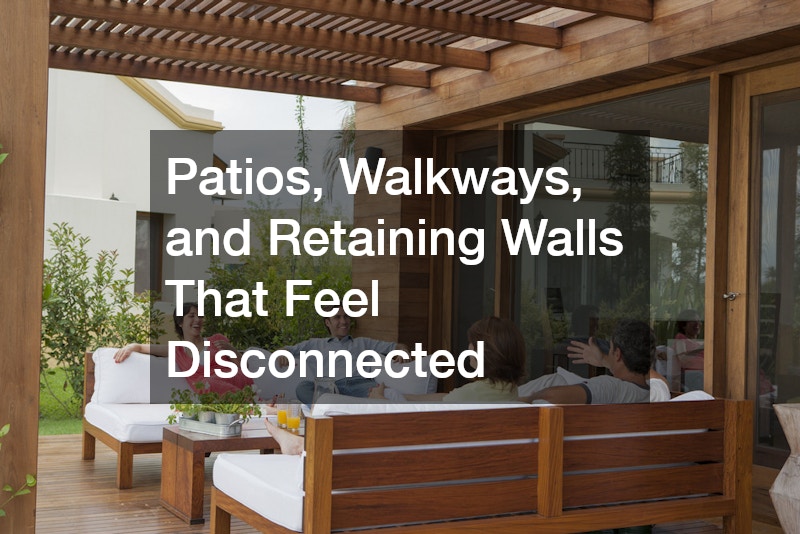
Hardscaping elements like patios, walkways, and steps are often added at different times by different owners, which means materials and styles rarely match by default. A poured concrete patio next to a brick walkway, or mismatched paver colors leading to the front door, creates visual noise that distracts from the home itself. These inconsistencies are especially noticeable in backyard spaces, which buyers increasingly view as an extension of livable square footage.
The problem usually compounds over the years as each project gets handled separately. A homeowner might pour a concrete slab patio in one decade, add flagstone stepping stones to the garden a few years later, then hire a different contractor to install a brick paver walkway out front. Each material choice made sense in isolation, but strung together they read as a patchwork rather than a cohesive outdoor living space.
Retaining walls add another layer of complexity, since they’re often built for function rather than aesthetics. A concrete block retaining wall holding back a sloped yard rarely gets chosen to complement the home’s existing stone or brick accents, and buyers touring the property will notice the clash even if they can’t articulate why the space feels off. Timber walls next to a stucco house, or gray cinderblock beside warm-toned brick, are common culprits.
Appraisers and buyers alike tend to mentally tally the cost of “undoing” these mismatches, whether it’s replacing a walkway or resurfacing a patio to match the home’s dominant material palette. Even a modest hardscaping refresh — say, swapping a cracked concrete path for pavers that echo the home’s brick tones — can meaningfully improve curb appeal and perceived cohesion. Since outdoor renovations often return 50-80% of their cost at resale, getting the material story right the first time is far cheaper than correcting it later.
Hardscaping added piecemeal over the years is one of the most common culprits behind a disjointed backyard. A red brick patio, a bluestone walkway, and a gray concrete retaining wall might each look fine individually, but grouped together they read as three unrelated projects rather than one cohesive outdoor space. Buyers touring a home notice this kind of visual clutter even if they can’t quite articulate why the yard feels off.
Thoughtful hardscaping ties these separate elements together using consistent materials, colors, and transitions between spaces. That doesn’t mean every surface needs to match exactly — pairing a stamped concrete patio with natural stone walkway borders can work well, as long as the tones and textures share a common palette. A good rule of thumb is to limit yourself to two or three complementary materials across the entire yard, rather than a different one for each feature.
A well-built concrete retaining wall can also solve grading issues while matching the tone of your patio or walkway, turning a functional necessity into a design feature. Options like stamped, stained, or split-face block concrete retaining walls let you echo the color and texture of nearby hardscaping instead of settling for a plain gray slab. Even small details, like matching cap stones on a retaining wall to the coping on a nearby patio, make the whole layout feel intentional.
Planning these elements together, rather than adding them piecemeal over the years, results in a yard that feels finished rather than patched together. If you can’t install everything at once, at least choose all your materials upfront and phase the work in over time. This keeps future additions consistent and protects the resale value you’re trying to build rather than eroding it one mismatched project at a time.
- Match paver or stone colors and textures between patios, walkways, and steps so buyers see one continuous outdoor space, not a patchwork of leftover projects
- Use retaining walls to solve drainage or slope issues while enhancing visual flow, choosing block or stone that echoes your home’s foundation or siding tones
- Choose one dominant hardscape material — like a warm-toned concrete paver — and use brick, gravel, or natural stone only as accents to avoid a busy, competing look
- Stick to two or three colors total across all hardscaping to keep the palette cohesive from the driveway to the backyard
- Plan hardscaping changes alongside any major landscaping updates so plant beds, edging, and walkways get installed together instead of in disconnected phases
- Ask your contractor for leftover paver or stone samples to test against your home’s exterior paint and roofline before committing to a full installation
Outdoor Furniture and Decor That Undercuts a Polished Exterior
Even a perfectly coordinated exterior can look unfinished if the furniture and decor filling the space feel mismatched or worn out. Faded cushions, rusted frames, or a random assortment of furniture styles pulled from different eras can distract buyers touring outdoor living spaces. This is an easy fix compared to structural changes, yet it’s often overlooked until just before listing a home.
Choosing outdoor patio furniture that complements your home’s color palette and architectural style helps outdoor spaces feel like a natural extension of the house rather than a separate afterthought. Simple choices, like matching frame finishes to your railing or trim color, can make a modest patio set look considerably more expensive. Staging outdoor spaces with cohesive furniture is one of the most cost-effective ways to boost perceived value before a sale.
- Choose furniture finishes that echo metal or wood tones used elsewhere on the home
- Replace faded or torn cushions before listing your home
- Keep furniture scaled appropriately to the size of the patio or deck
- Store or remove mismatched or excess pieces to keep outdoor spaces looking curated
Mismatched exterior materials rarely happen on purpose, they accumulate gradually as different projects get tackled at different times with different priorities. The good news is that most of these issues can be corrected with thoughtful planning rather than a full teardown. Start by walking your property with fresh eyes, or invite a professional to point out inconsistencies you may have stopped noticing. A cohesive exterior not only looks better today, it protects the resale value you’ve worked hard to build.