
Your roofline tells a story long before a leak shows up on your ceiling. Sagging ridges, uneven shingle lines, and subtle dips can signal structural issues that worsen quietly over months or years. Learning to read these visual cues gives you a head start on repairs while they’re still small and manageable. This guide walks you through the key warning signs so you know exactly what to look for and when to act.
Sagging Ridge Lines and Roof Deck Dips
The ridge line, the peak where two roof slopes meet, should run perfectly straight from one end to the other. A dip, wave, or sag anywhere along this line usually points to weakened rafters, water-damaged sheathing, or structural stress building underneath the surface. This is one of the clearest signs of trouble because the frame of the roof is designed to hold its shape for decades without visible movement.
Catching a sag early matters because the longer a weak spot carries weight and weather, the more it spreads to neighboring sections. Walk around your property and view the roofline from several angles, since a dip that isn’t obvious from the front yard may be glaring from the side.
- Stand at least 20 feet back for the clearest view of the ridge line
- Check both the front and back slopes separately, since damage often starts on one side
- Look for shadows or light reflections that reveal subtle unevenness
- Take photos over time to track whether a dip is getting worse
Shingle Granule Loss and Surface Wear Patterns
Shingles lose a few granules naturally as they age, but heavy or patchy granule loss is a red flag that the roofing material is breaking down faster than it should. You’ll often spot this as dark streaks on the shingle surface or as a buildup of gritty debris in your gutters and downspouts. Bald patches expose the asphalt layer underneath to direct UV rays, which accelerates cracking and shortens the roof’s remaining lifespan.
Wear patterns aren’t always uniform across the roof, and that unevenness is itself useful information. Shingles on a south or west-facing slope typically wear faster due to prolonged sun exposure, while shaded areas may show moss or algae growth instead.
- Inspect gutters for granule buildup, especially after heavy rain
- Compare shingle color and texture across different roof sections
- Watch for curling or cupped edges, which often accompany granule loss
- Note any shiny or slick patches where the asphalt is exposed
Flashing Gaps Around Chimneys and Vent Pipes
Flashing is the thin metal barrier installed around chimneys, skylights, and vent pipes to keep water from seeping into the seams where the roof meets another structure. Over time, flashing can loosen, rust, or pull away from its original position due to temperature swings and settling. Even a small gap here can let water travel directly into your attic, often with little visible evidence until the damage has spread well beyond the original leak point.
Because flashing problems are rarely visible from the ground, binoculars or a zoom lens on your phone camera can help you spot rust streaks, lifted edges, or missing sealant without climbing a ladder. If you notice water stains on interior ceilings near a chimney or vent, that’s often the first real clue that flashing has failed somewhere above.
- Check for rust-colored streaks running down the roof surface
- Look for gaps or visible daylight where flashing meets the roof plane
- Inspect sealant around pipe boots for cracking or shrinkage
- Pay close attention after major storms, which can loosen flashing further
Uneven Gutter Lines and Water Pooling Signs
Gutters that sag, pull away from the fascia, or hold standing water are often a symptom of roofline trouble rather than a standalone gutter problem. Excess weight from trapped debris or water can pull fasteners loose, but a gutter line that’s uneven across its full length may indicate the fascia board itself has rotted or the roof edge has shifted. This is worth investigating promptly, since water that isn’t draining properly tends to find its way behind siding or into the foundation area.
Pooling on a flat or low-slope section of roof is another signal worth tracking closely. Standing water adds significant weight and accelerates membrane breakdown, so repeated pooling in the same spot after rain usually means the slope or drainage at that location needs attention.
- Watch for gutters that visibly dip or separate from the roofline
- Check for water marks or stains on the fascia board
- Note any spots where water pools for more than 24 to 48 hours after rain
- Clear debris regularly to rule out simple clogging as the cause
Interior Ceiling Stains and Attic Daylight Checks
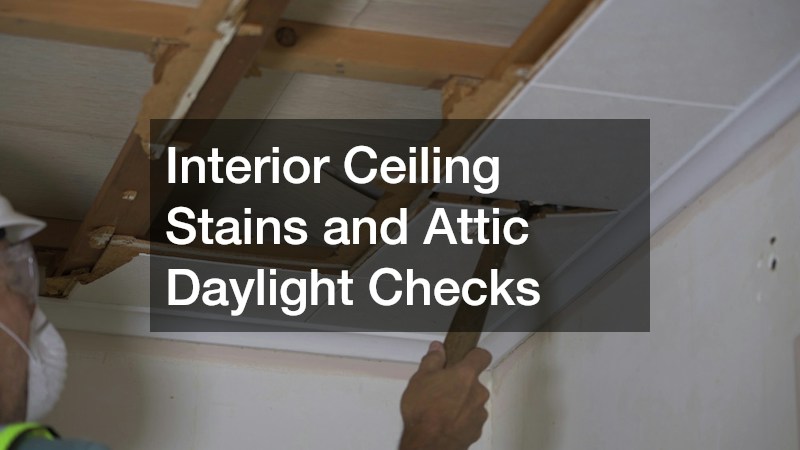
Some of the most reliable roofline clues aren’t on the roof at all, they’re inside your home. Brown rings or yellowish stains on ceilings, especially near exterior walls or chimneys, usually mean water has already found a path through the roof assembly. By the time a stain appears, moisture may have been accumulating in the attic insulation or sheathing for weeks.
A quick attic inspection on a sunny day can reveal problems you’d never catch from outside. If you see pinpricks of daylight coming through the roof deck, that same gap is letting in water whenever it rains. Many homeowners wait until a visible leak forms before calling in roofing contractors, but scheduling an inspection as soon as you notice early warning signs can prevent a small repair from becoming a full roof replacement.
- Check attic insulation for damp or compressed patches
- Look for daylight gaps around vents, ridge lines, and roof edges
- Smell for musty odors, which often indicate hidden moisture
- Note the location of any ceiling stains relative to roof features above them
Reading your roofline regularly, rather than waiting for an obvious leak, puts you in control of repair costs and timing. Most of the warning signs covered here take only a few minutes to check from the ground or attic, and catching them early almost always means a smaller, less expensive fix. Make roofline checks part of your seasonal home maintenance routine, particularly after major storms or temperature swings. If you spot any of these signs, getting a professional assessment sooner rather than later will save you both stress and money down the road.